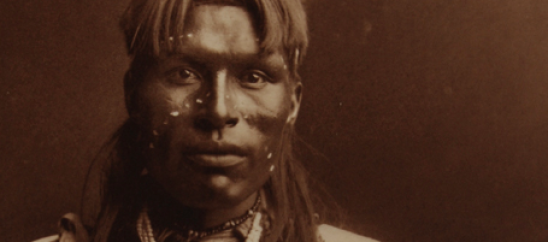
In this, the second installment of Dog Eared Discoveries, my bookshelves offer up “Short Nights of the Shadow Catcher,” Timothy Egan’s epic biography of photographer Edward Curtis.
I have long been a fan of Curtis’ images, which seem to sear right to the soul – both that of the subject and that of the viewer. It is like Curtis demands that we see past the cliché and costume of the Native American to their essential humanity. And, perhaps, that we question our own humanity. As a young reporter in Minneapolis, one of my few freelance pieces was about a stunning collection of Curtis photos obtained by a St. Paul gallery. To this day, I regret that I did not forego a year’s worth of shoes and heat and dinners out to buy one. Now I can visit an entire wall of them at Chihuly Garden & Glass at Seattle Center.
I also am a fan of Tim Egan’s work. When I was an editor at The Seattle Times, I winced on many Sundays when a piece of his in The New York Times would stitch together the pieces-parts we had reported over several months into one big, meaningful quilt. I have been even more taken with his book-length work about early 20th century American history: The government’s complicit role in the Dust Bowl; the creation of the U.S. Forest Service in the wake of a devastating forest fire; Curtis’ obsessive quest to capture the end of an era. (And he writes those no-BS Opinionator pieces in The Times. Damn, he’s good.)
There are dozens of dog-eared pages in my copy of “Short Nights” (mass-produced paperback version, so much more affordable than a Curtis original). The following is from pp 138-139. Edward Curtis is on the brink of financial ruin; he has run through countless friends, frayed his marriage, jeopardized his health and credibility. But he cannot turn from his obsession. He has been struggling to write the first volume of a promised epic about the vanishing world of the Indian. Now he is alone in his tent and distraught. Until, as Egan writes and Curtis’ diary records, “his muse (arrives) at last from the outdoors.”
“At the moment, I am seated by a beautiful brook that bounds through the forests of Apache land. Numberless birds are singing their songs of life and love. Within my reach lies a tree, felled only last night by a beaver … “
(Egan) That felt right: the words, like the pictures, must spring from the earth itself.
“Nature tells the story,” (Curtis) continued, the light from his candles receding, wax falling to the tent floor. Though he would herewith record group histories, as one might explain Viking clans and their many battles, the goal of this narrative of small nations was to tell them from the point of view of the land and the Indian.
Wow. “… the goal of this narrative of ‘small’ nations was to tell them from the point of view of the land and the Indian.”
The meaning and value of point-of-view journalism (POV) is debated and often decried. It seems, to some, as journalism with an agenda. Certainly not all reporting should be from the inside out; much – maybe even most in this fractious world – needs to be reported from the more detached view of the independent observer who sees all perspectives, questions all points of view.
But standing inside a story is also an essential part of the craft, and of the journalists’ quest for truth. Or, since truth is elusive, for authentic experience. It is the kind of storytelling that asks the rest of us to walk in another’s shoes. Or, as my revered late editor Deborah Howell – who wore hand-beaded earrings and Native American turquoise jewelry, and draped her walls in Native American art – called it, walking in someone else’s moccasins.
Edward Curtis figured that out with his camera. Tim Egan shares that wisdom in his book.